Taylor Bros. & Co.
By Florence Taylor Vay
Reprinted from The Hobstar, November 1984
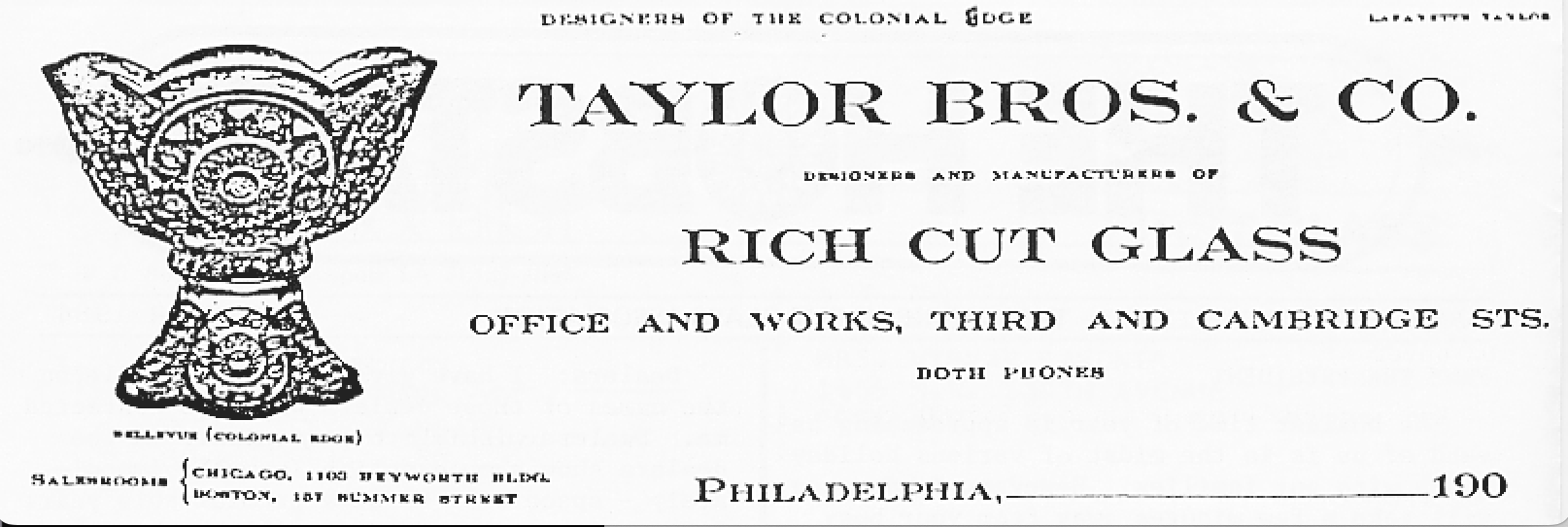
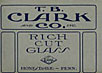
The above is the original letter heading for the Taylor Bros. & Co. Cut Glass business. Lafayette Taylor and his wife Ruby were my father and mother. In 1966 mother started to write her memoirs at age 89. The following is her story of the Cut Glass factory.
"My brothers Bob and Ansel, were glass cutters, one a rougher and the other a smoother. In 1902, Lafe went into partnership with them and started a cut glass factory at 928 North Camac Street (Phila., PA). I gave up my work at Lit’s department Store and went to work in the factory. After the glassware was finished in the cutting room it had a frosted look. Before it was dipped in the acid for polishing most of the pieces had to be lined with black paraffin, after which the scallops had to be cleaned very carefully, because if one speck of paraffin remained there would be no polish, so with clean rags, we had to go over every scallop, and that is what I did. Our office room was very small and one day as Lafe and I were sitting in there, Mr. Stark came to the door and stood talking to us for a few minutes. He said that he felt sick and asked to leave to go hone. Within a week he died of smallpox, which was quite prevalent at that time.
The business prospered and the factory was moved to larger quarters at Third and Cambridge Streets. A bookkeeper, Miss Jennie Letterly, was hired, and I stopped working in the factory. My brothers had left the lion, and Lafe’s bother Albert put in one thousand dollars and the name was changed to Taylor Brothers and Co. Lafe designed the ‘Bellevue pattern’, a rich, beautiful and expensive design, and it sold very well in the best jewelry stores. Lafe traveled all over the South and Midwest and always sent in large orders and things were going fine for us. Then calamity struck! In 1910 the trolley car conductors went out on strike and our men went out is sympathy with them, and this put us into bankruptcy
I only remember going down to the factory once, probably on a Saturday afternoon, because there was only one man working at the long tables which lined both sides of the long room which had continuous windows. Sometimes a cutter would work on the weekend making a personal gift out of a blank that had been spoiled by a mistake. These were called ‘scrims’. There was sawdust on the floor, and the whole building was wooden and unpainted on the inside. The man sat on a stool, with his foot on a treadle which rotated a wheel above the table and hanging above this was a cone which dripped something onto the wheel. I remember my father hurrying me on so I wouldn’t bother the cutter; he wanted to show me the homing pigeons he had in cages out on the roof above. It was a hobby he had for many years. While we were up there, one of the pigeons came in and my father opened the cage door and took off a message that was wrapped around its leg. He read it to my mother but I was too young to understand what it said.
When the company went bankrupt my father divided the glass and gave half to his brother, whose grand-daughter lives in Cherry Hill, New Jersey, where we had our convention last year (1983). I saw her collection for the first time while we were there and incidentally it was the first time I had met my cousin and her family. It was a happy reunion.
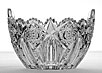
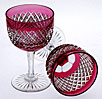
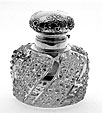
Taylor Bros. was a small factory which employed no none more than a dozen workers, so the output was limited, thus the still existing pieces are rare. I have always thought that the Bellevue pattern with the scalloped colonial edge is one of the most beautiful patterns ever cut and I am very proud of my heritage.
Back to articles index